
The Imagine Northern Rivers workshop series was held in Lismore Shire between October 2025 and April 2026. In total, 60 participants engaged in three workshops held as follows: Resilient Lismore, the Rotary Club of Summerland Sunrise and an open workshop with the general community. Participants represented resilience, civic, not-for-profit, cultural, government and research sectors, as well as general residents. Responses from all workshops have been analysed together as a single dataset. Participants responded to a series of questions designed to elicit an understanding of what a regenerative, safe and adaptive future could be like within the lifetime of a child born today.
Initial Insights - Lismore City
So far we have collated the following findings from 3 workshops across Lismore City:
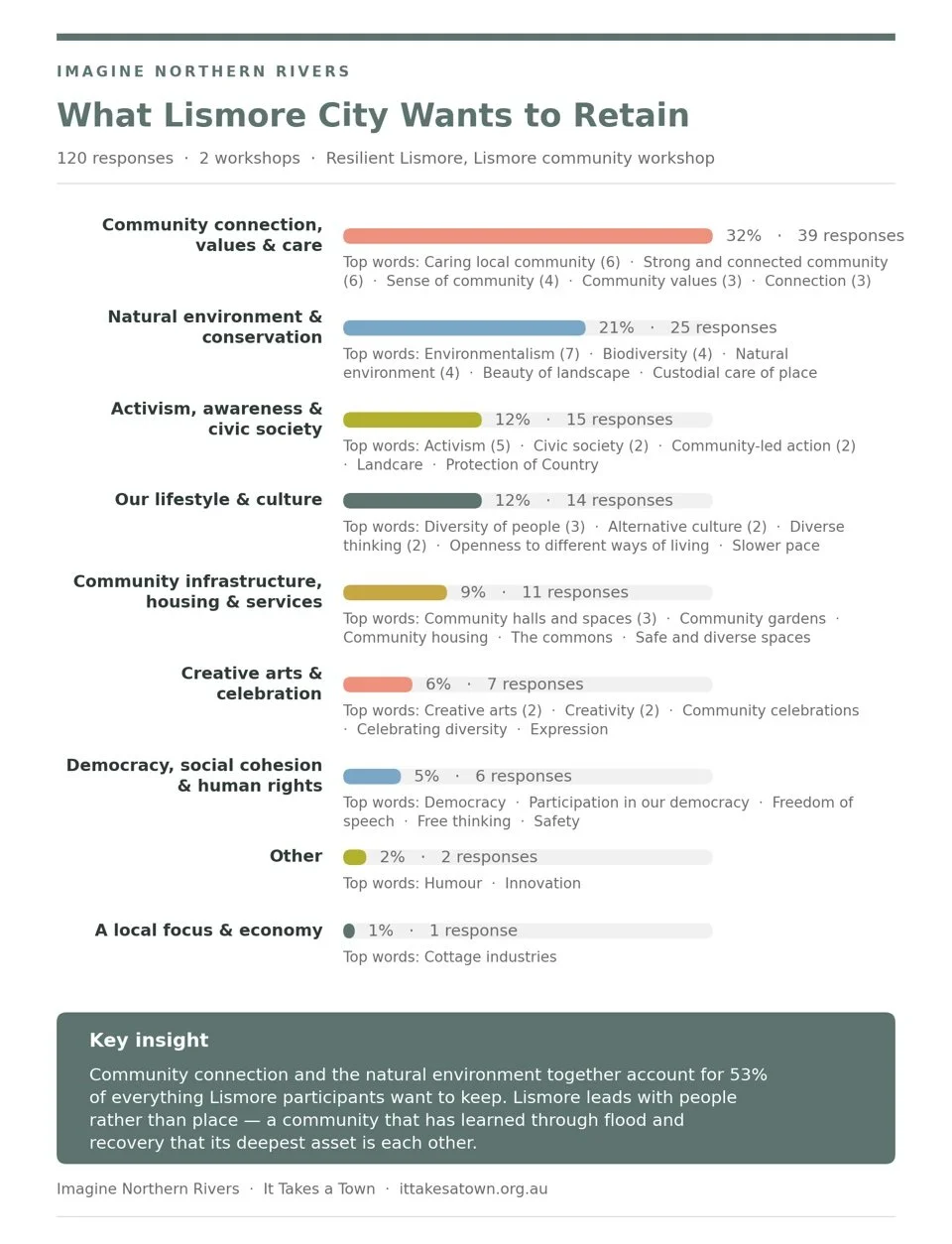
What do people want to retain from the present?
Participants generated 120 responses to the question “what do you value most about the present,and want to retain in to the future”. The following are the top themes / ideas:
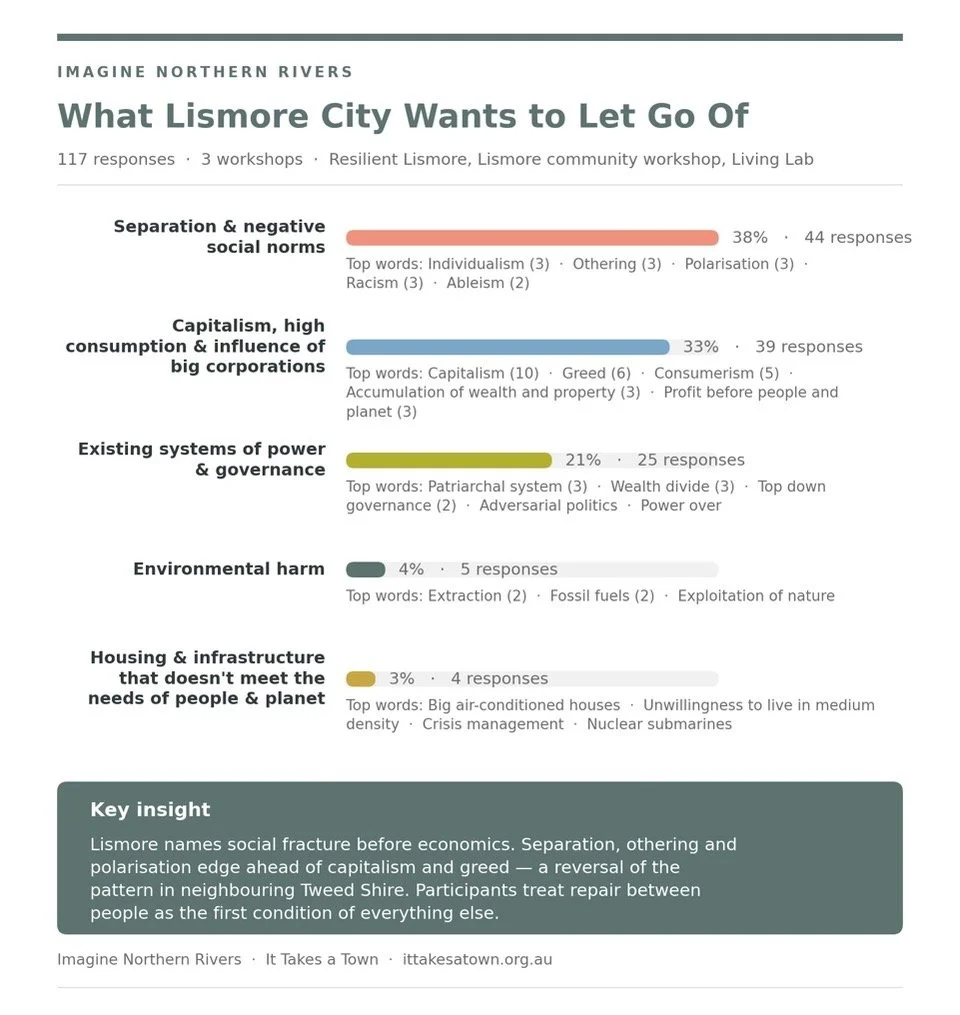
What do people want to let go of from the present?
Participants generated 117 responses to the question “what do we need to stop doing in order to help our region regenerate and move towards our preferred future?”. The following are the top themes / ideas:
What does a safe, regenerative & adaptive future look like?
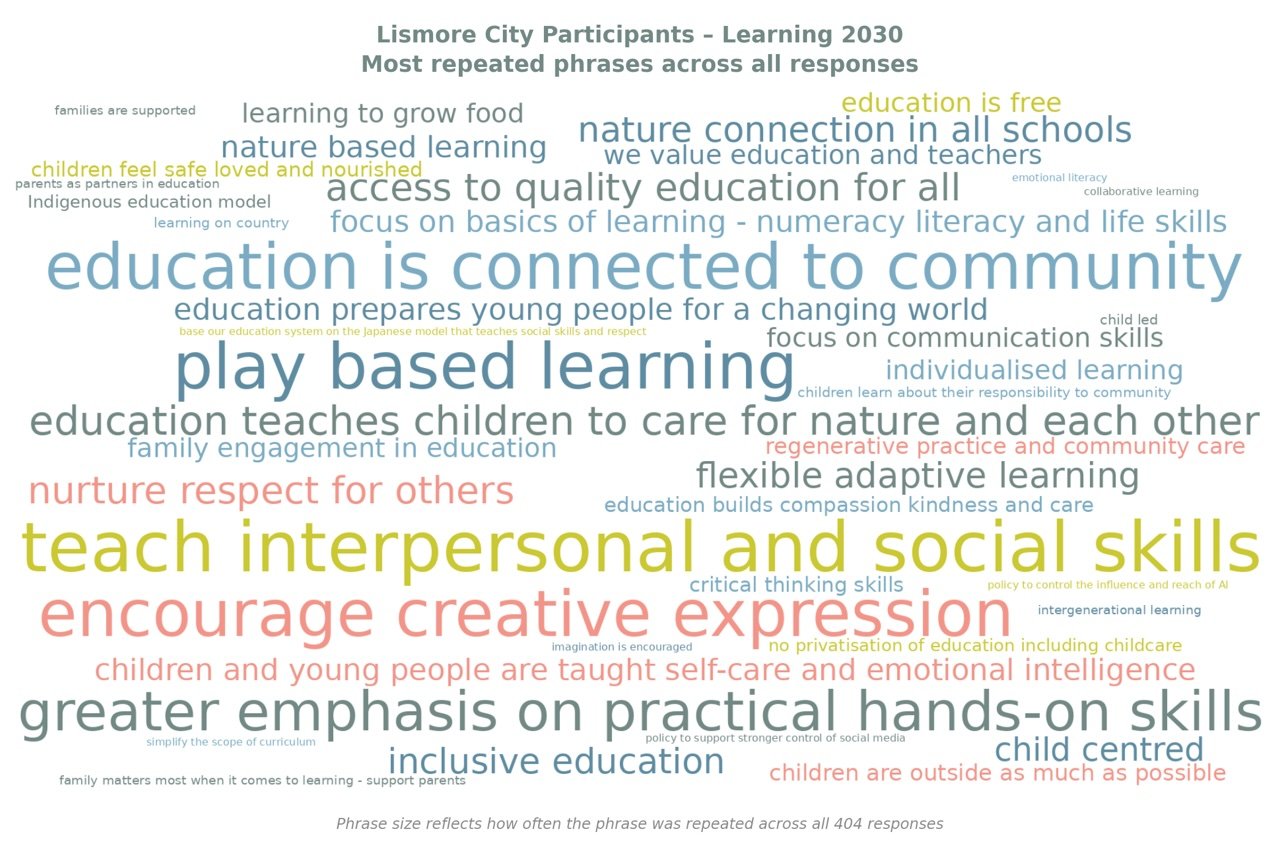
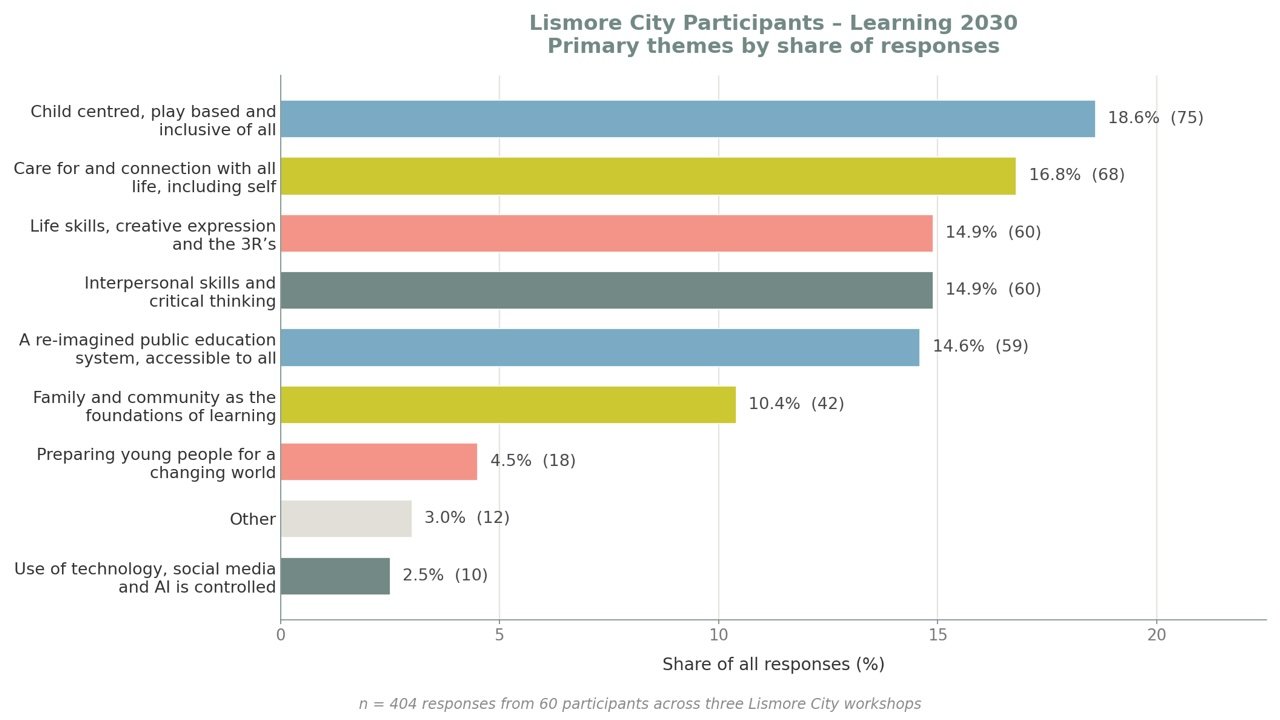
Possible Future of Learning (2030)
Participants generated 404 responses to this prompt: “Imagine… It’s 2030 and a child born today is turning 5 years old, beginning their formal learning journey alongside the world of play…What does learning look like in a world where children feel safe, loved and nourished at all levels of their being? … How are children developing resilience and building the skills, values and qualities they will need to live and contribute in a changing world?”
Possible Future of Climate Adaptation (2035)
Participants generated 435 responses to this prompt: "Imagine... It's 2035 and a child born today is turning 10 years old. The outcomes of 10+ years of work by government and community to adapt to climate change and strengthen resilience is becoming visible around them. What has changed in the design of our built environment and our relationship with the natural environment, that is strengthening our resilience to an increase in temperature, severe fire weather, sea level rise & changing rainfall patterns? ... What changes do you notice in how your child's family is living and moving around in the world, that is contributing to shared resilience and regeneration?"


Possible Future of Housing (2040)
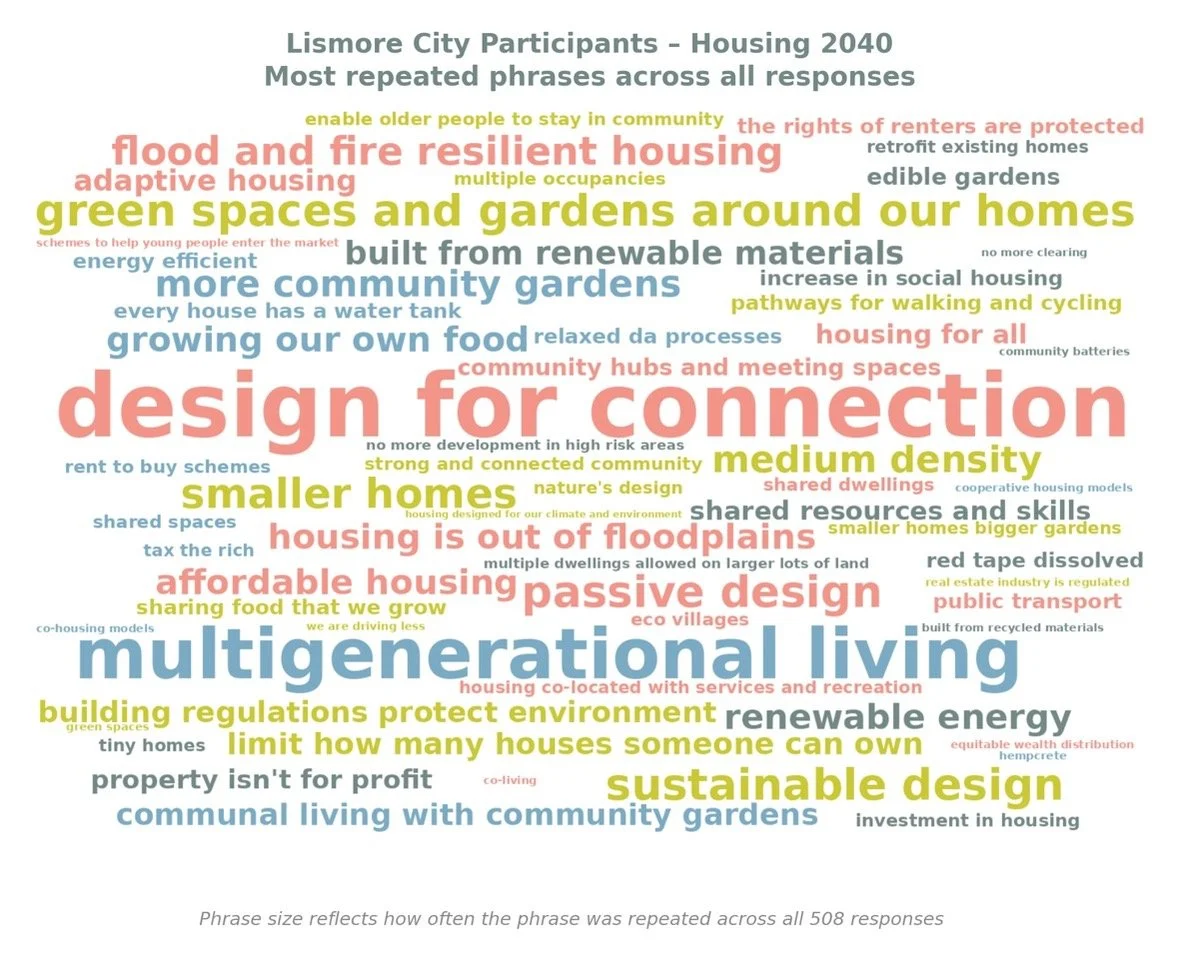
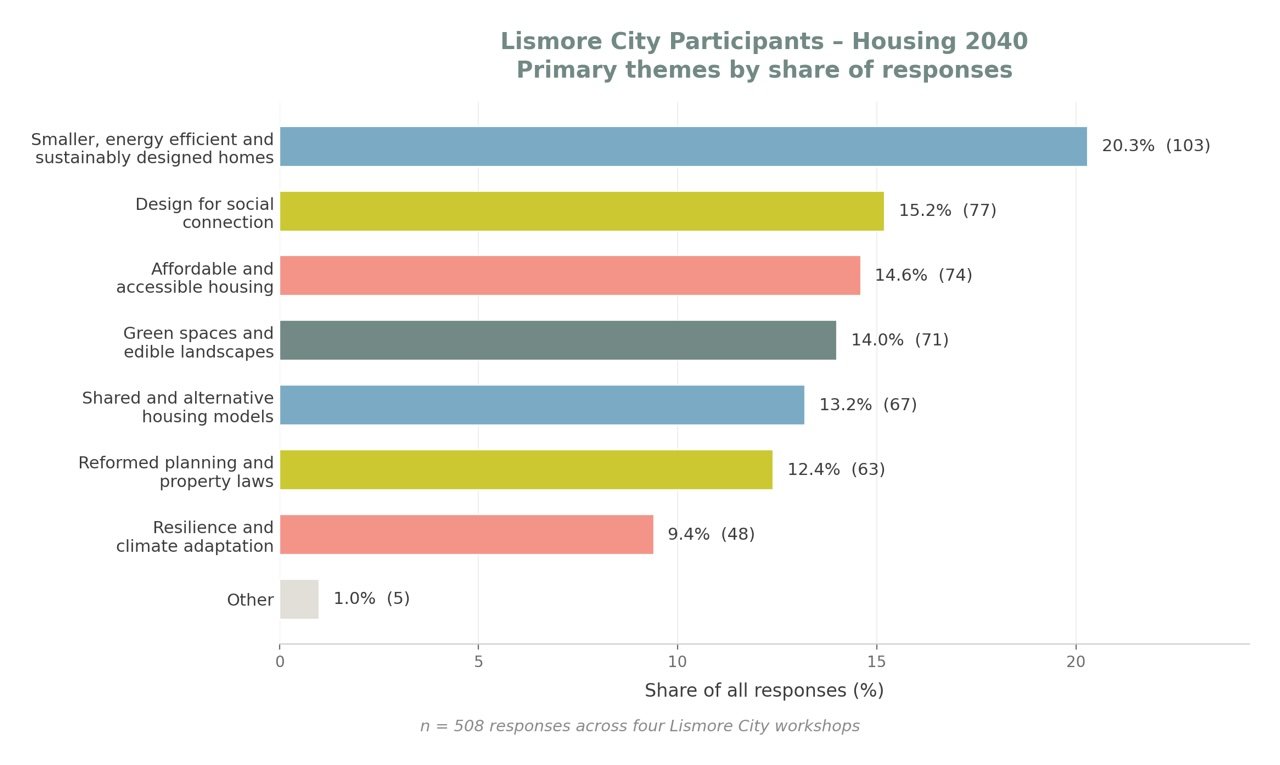
Participants generated 508 responses to this prompt: “Imagine… It’s 2040 and a child born today is turning 15 years old. In response to the housing crisis of the 2020’s, a massive collaboration between government, business and community has led to an extra 21,000 homes becoming available across the Northern Rivers. What does our child’s home, garden and community look and feel like? How have we balanced rapid construction of housing with the need to protect our natural environment? What policy shifts have enabled everyone to have access to safe and affordable homes with low environmental impact?”
Possible Future of Economy (2045)
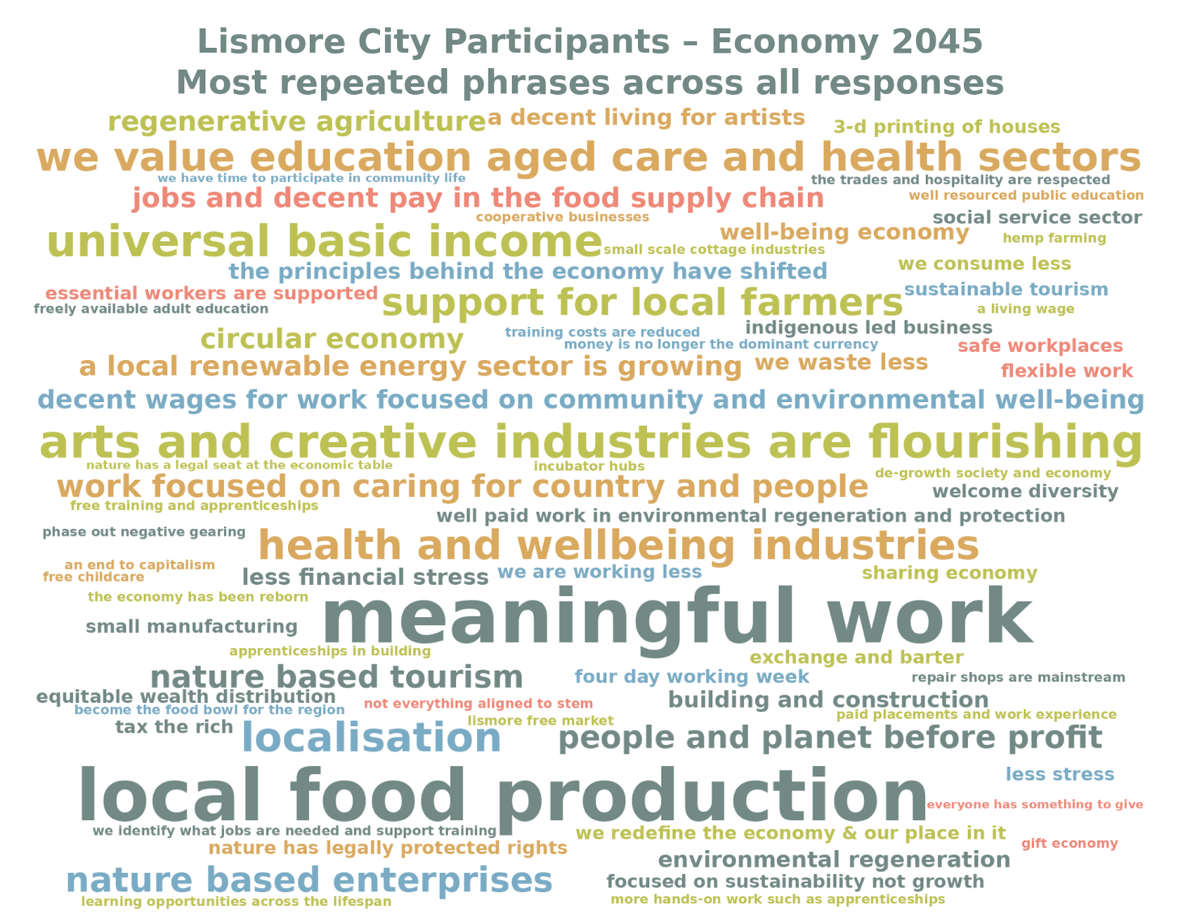
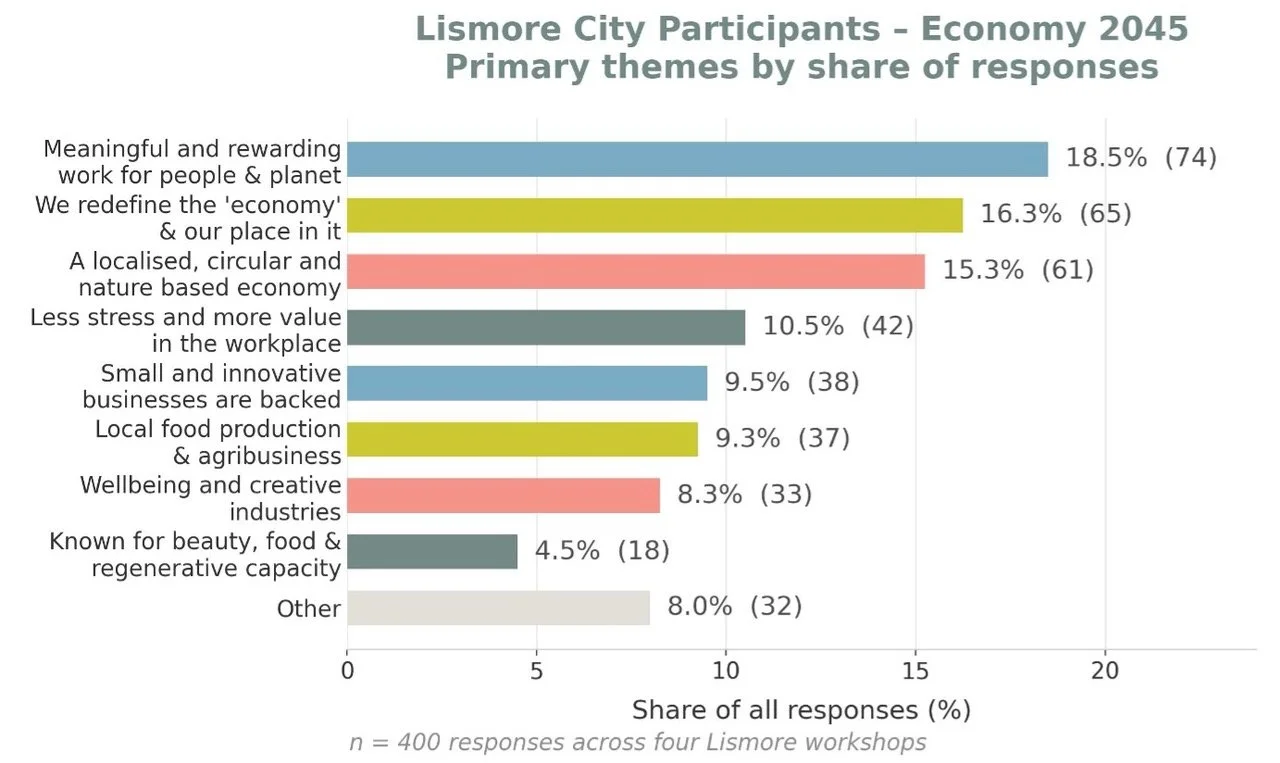
Participants generated 400 responses to this prompt: ““Imagine… It’s 2045 and a child born today is turning 20 years old, entering the world of work. At this time there are an extra 21,000 people of working age who call the Northern Rivers home… What does meaningful work look like?... What industries and sectors are experiencing rapid growth due to their alignment with community values?... What’s different (if anything) about the principles behind our economy?”
Possible Future of Environment (2050)
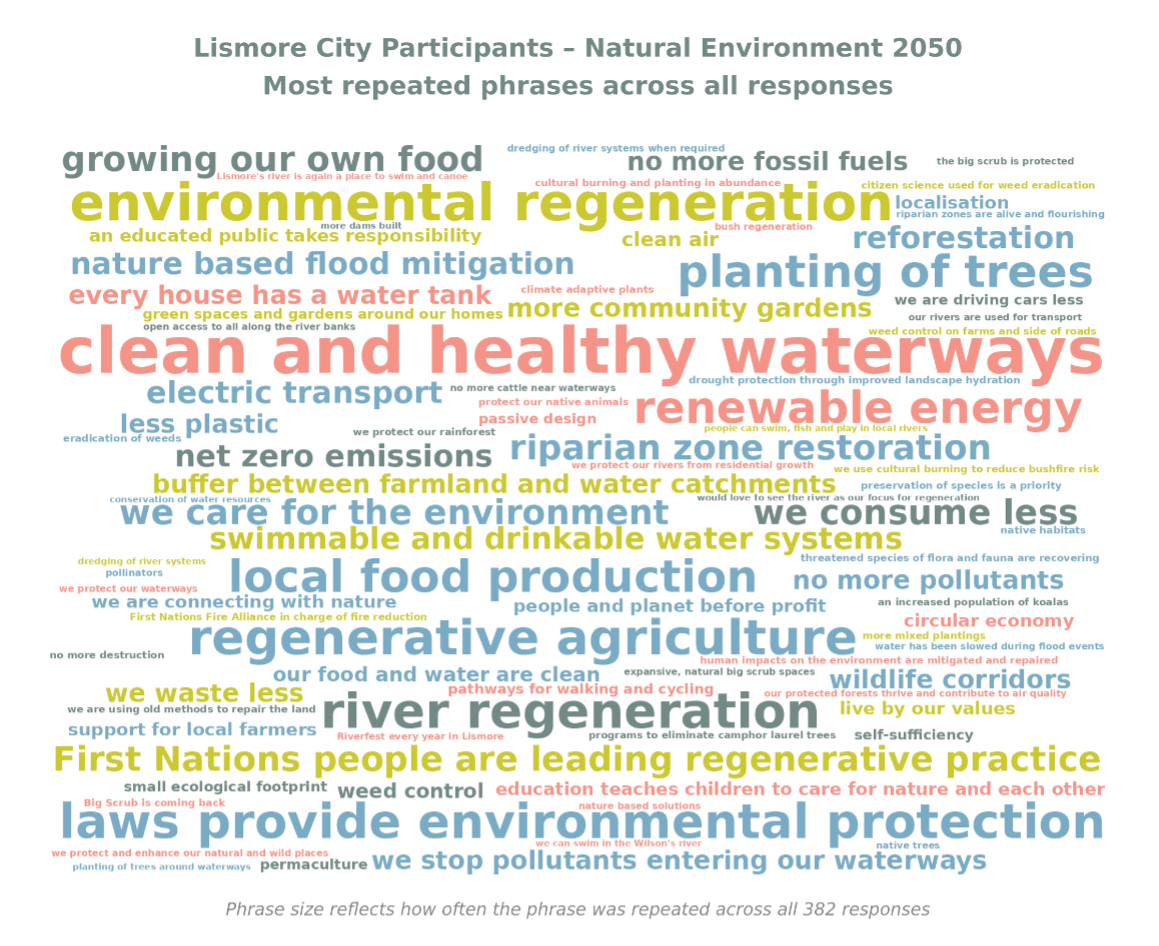
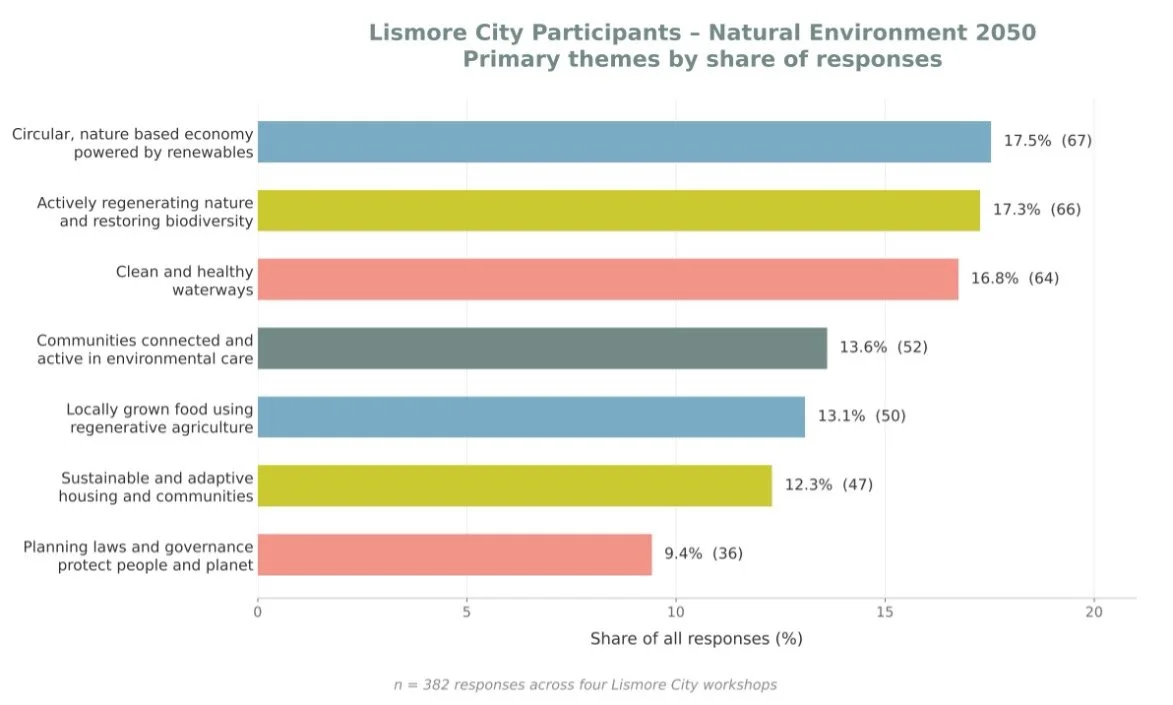
Participants generated 382 responses to this prompt: “Imagine… it's 2050 and a child born today is turning 25 years old, starting his or her own family. Our child grew up participating in collaborative efforts to regenerate our natural environment and feels relief to start a family at a time when net zero emissions and achievements in environmental regeneration are making headlines. What does this environmental regeneration look like across our waterways, forests and farmlands? … What are the policies, actions and changes to how we live, that have supported the regeneration of our natural environment?”
More data to be published soon.
Detailed reports are available below.
Reports for each of the above themes are available here:
THE PRESENT
THE FUTURE